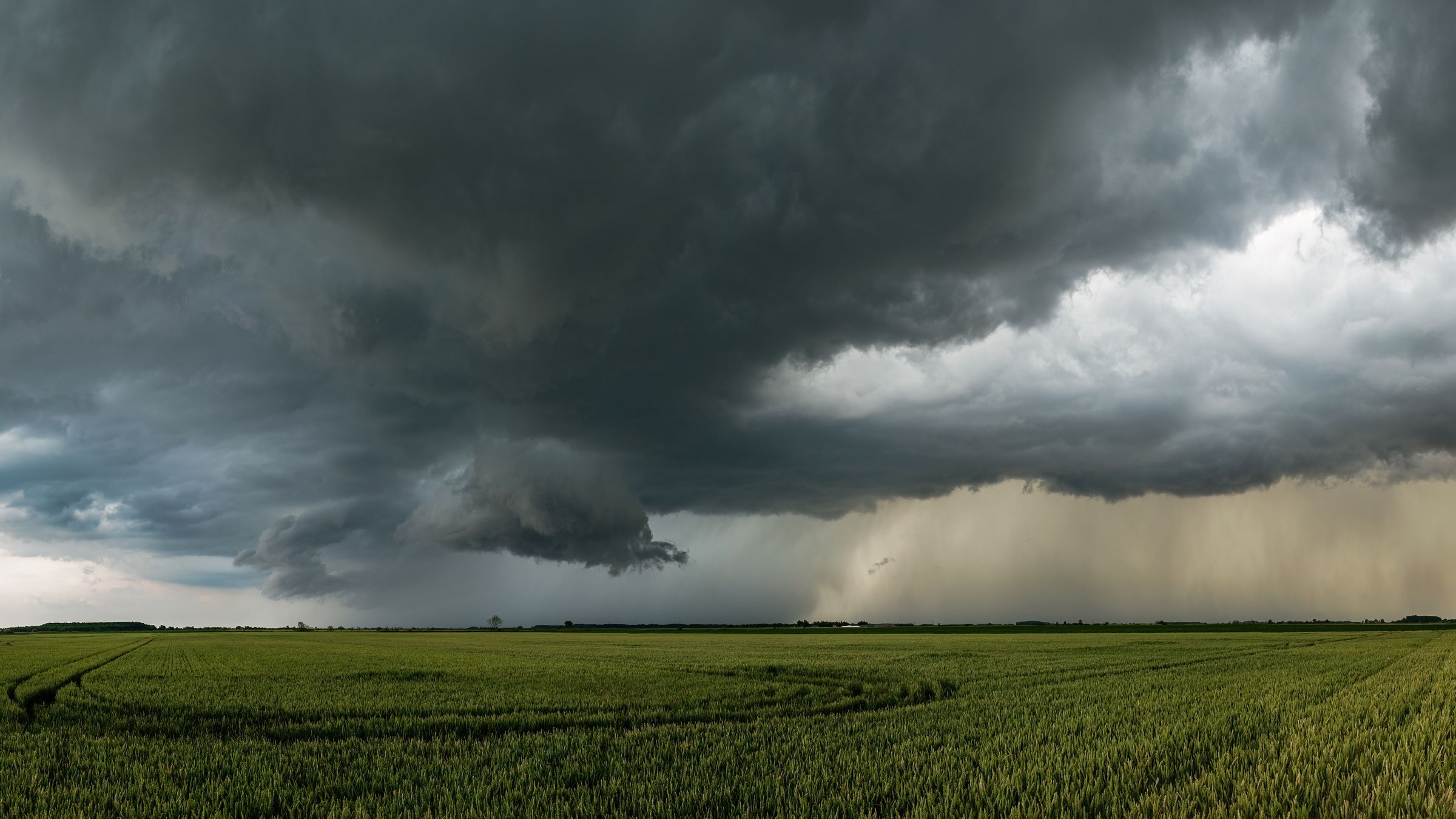
Storm & hail damage
Storm and hail damage roof repair in Aubrey and Denton County
Hail or wind damage? We inspect for free, photograph what the storm did, and write it up so you can give it to your insurer. Then we give you honest repair or replacement options.
Storm log · checked September 24, 2026
Recent storms: June 2, 2026 Denton County hail (and the running storm log)
On the evening of June 2, 2026, the National Weather Service logged hail across the south end of Denton County between about 5:50 and 6:25 p.m. The biggest was egg-size, 2 inches across, near Lebanon Road in The Colony.
Hail that size can crack shingles outright. Smaller hail can still bruise an older roof without leaving anything you’d notice from the ground. Closer to our office, nickel-size hail was reported a mile north of Aubrey on May 19.
A storm report means someone saw hail at that spot and told the Weather Service. Hail falls in streaks, so a report a few miles away doesn’t mean your roof was hit, and no report doesn’t mean it wasn’t. The only way to know is to look.
| Date | Time | Where | Size |
|---|---|---|---|
| August 7, 2026 | 6:51 p.m. | 4 miles west of Prosper | Dime (0.75″) |
| June 2, 2026 | 6:23 p.m. | 2 miles NNE of The Colony, near Lebanon Rd | Egg (2.00″) |
| June 2, 2026 | 6:05 p.m. | The Colony | Nickel (0.88″) |
| June 2, 2026 | 5:50 p.m. | 2 miles east of Carrollton | Dime (0.75″) |
| May 24, 2026 | 3:15 p.m. | 4 miles WNW of Justin | Quarter (1.00″) |
| May 19, 2026 | 1:45 p.m. | 1 mile north of Aubrey | Nickel (0.88″) |
Sources: NWS Local Storm Reports (Iowa Environmental Mesonet archive) · Storm Prediction Center reports, June 2, 2026. We add storms here as the Weather Service logs them.
From the ground
How to tell if your roof has hail damage (with photos)
You can spot most of the warning signs without a ladder. Please don’t climb up after a storm; a wet, hail-covered roof is slippery. That part is our job.
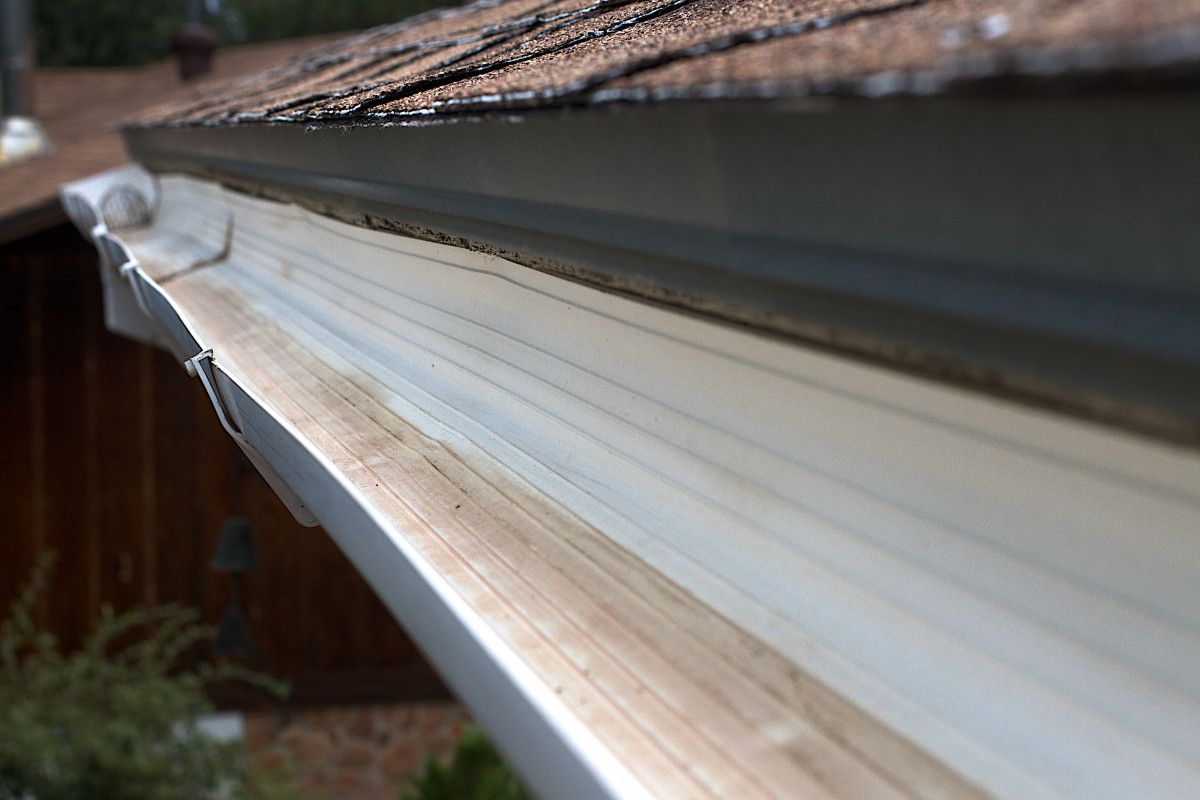
Sample photo Dents in soft metal
Look at gutters, downspouts, vents, and the fins on your AC unit. Fresh dents there are the easiest sign from the ground that hail hit hard enough to matter.
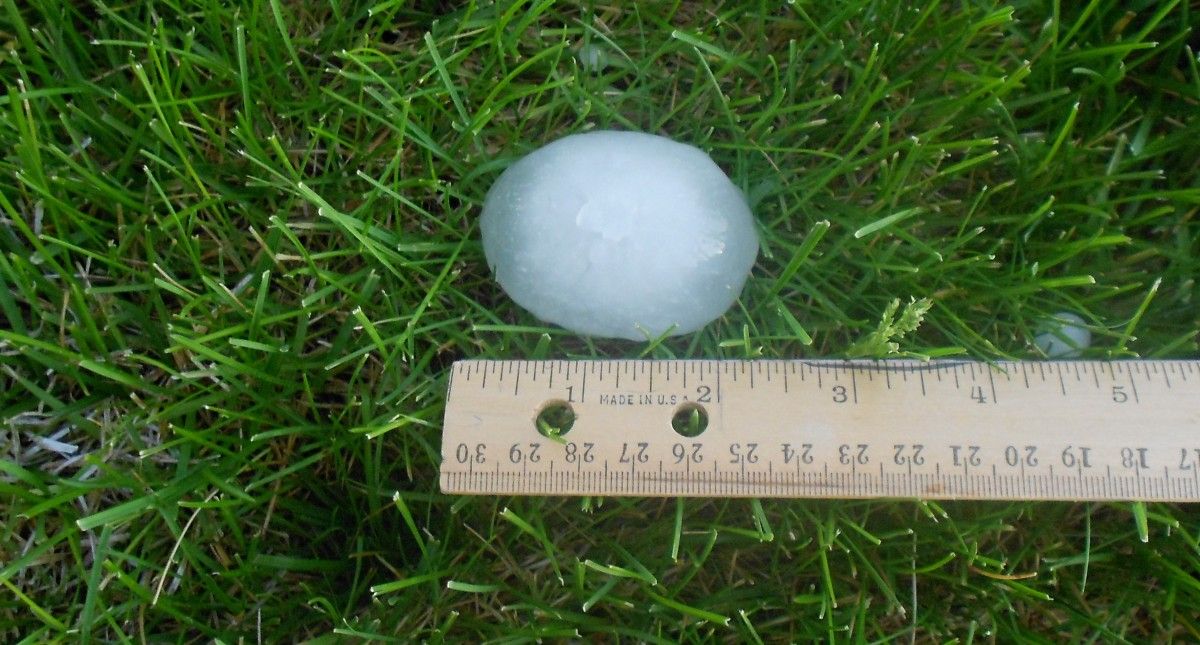
Sample photo The size of the hail
If you can, photograph a hailstone next to a ruler or a coin. Around quarter-size (1 inch) and up is when shingle damage gets likely, and smaller hail can still hurt an older roof.
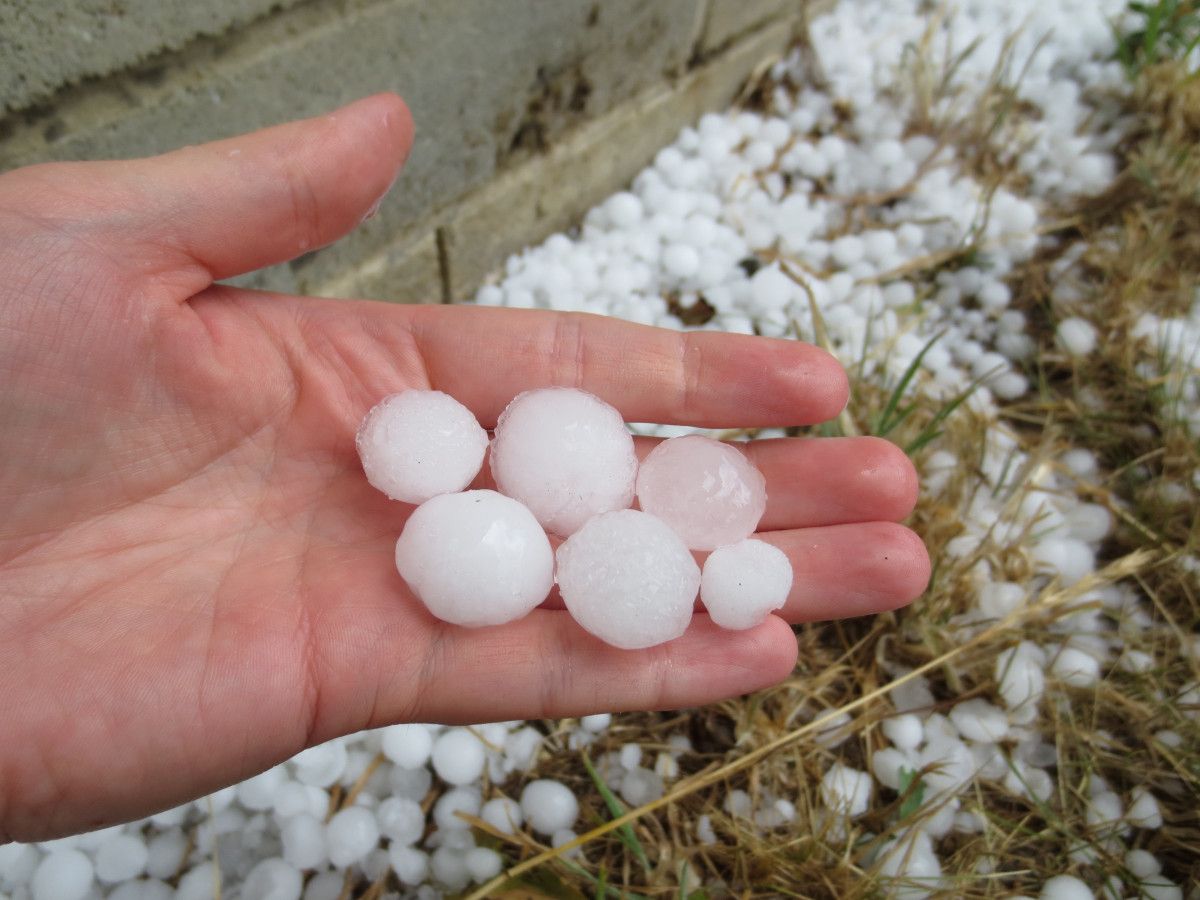
Sample photo Granules where they shouldn’t be
Shingle granules look like coarse black sand. A lot of it in the gutters or at the bottom of a downspout after a storm means hail knocked it off the shingles.
- Dark, round spots on shingles where the granules are gone
- Cracked, creased, or missing shingles after high wind
- New water stains on a ceiling or in the attic, sometimes weeks later
- Dented or split window screens and siding on the side the storm came from
Hail, or just an old roof?
Not every dark spot is hail. Heat and age raise small blisters on asphalt shingles that pop open and can look like a hail hit from a few feet away. Hail bruises are different: soft to the touch, scattered at random across a slope, and usually matched by fresh dents in the gutters and vents on the same side of the house. Wear shows up evenly, and it’s worst where water runs. Telling the two apart is part of the inspection, and the write-up says which one you have.
Real before-and-after photos from Revitalize’s own inspections will replace the sample photos here. Job photos (placeholder: 15–20 real photos: before/after roofs, crew, trucks. Every “Sample photo” gets replaced.)
Our part
What we do after a storm: inspect, photograph, tarp if needed, write it up
01
Inspect
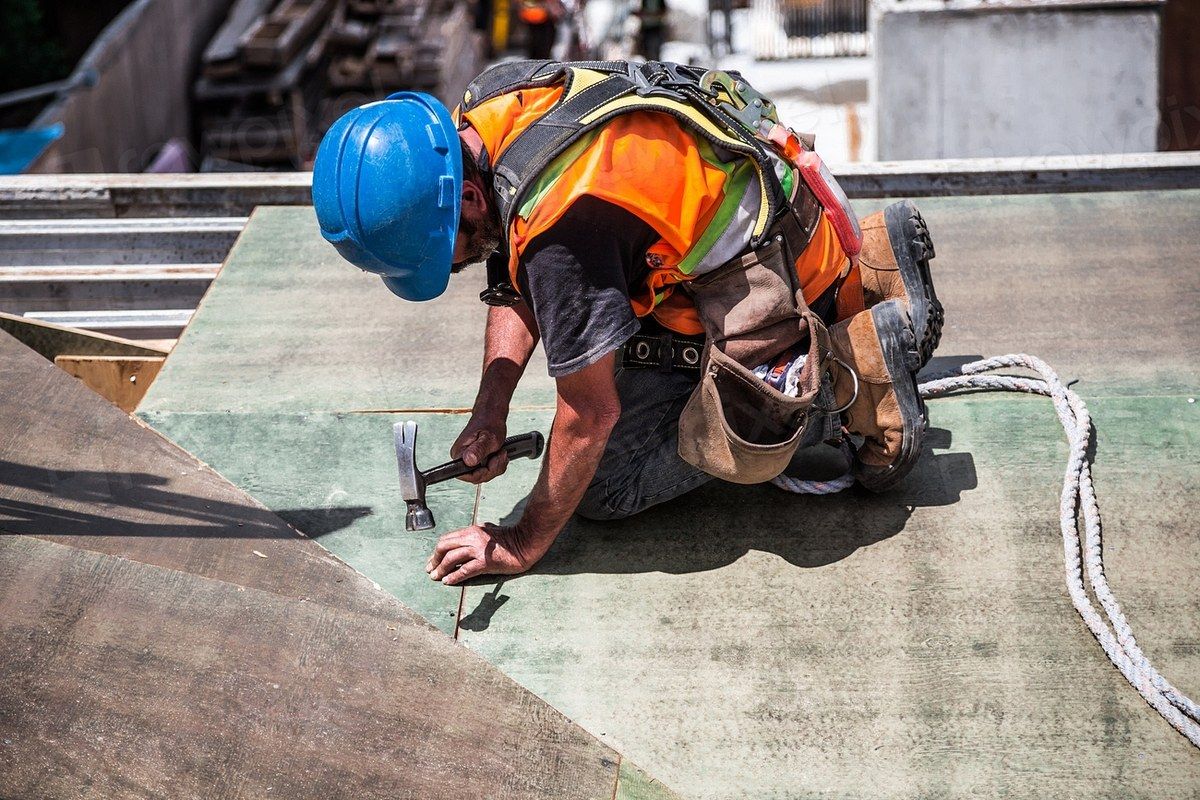
The whole roof, slope by slope, plus the soft metals, gutters, and the attic where we can reach it. Hail damage on vents and gutters helps show the storm hit your house.
Sample photo 02
Photograph
Every finding, where it is on the roof, with something in the frame for scale. You see exactly what we saw.

Sample photo 03
Tarp if needed
If there’s an opening that will let the next rain in, we cover it until the repair is done. Confirm tarping (placeholder: Confirm Revitalize tarps roofs after storms (the storm page says “tarp if needed”).)
04
Write it up
Plain-language findings with the photos attached: what’s damaged, what isn’t, and what we’d recommend. Yours to keep and to share with your insurer.
Straight talk
Repair or replace: how we decide with you
Not every storm means a new roof. We show you the photos, tell you which one we’d do if it were our house and why, and you decide.
Repair usually makes sense when
- The damage is in one area: a few shingles, a vent, a pipe boot, a run of flashing.
- The rest of the roof has plenty of life left.
- New shingles will match closely enough to look right.
Replacement usually makes sense when
- Bruising runs across whole slopes, not one spot.
- Many shingles are cracked or have lost their granules.
- The roof is old enough that lifting shingles for a repair would crack the ones around them.
Replacing? Try IKO shingle colors on a photo of your own house with IKO’s free ROOFViewer (opens IKO’s site) before you pick.
Roof replacement with IKO shinglesInsurance
Insurance claims: what you do, what we do, and what Texas law says we can’t do
Some roofers advertise that they’ll “handle your claim.” Texas law doesn’t let a contractor act as your adjuster. Here’s how it actually works.
You
- Decide whether to file a claim, and file it with your insurer.
- Meet the insurance adjuster your insurer sends.
- Pay your deductible.
- Choose who does the work.
Us
- Inspect the roof and document the damage.
- Give you the photos and written findings to share with your insurer.
- If you hire us, do the repair or replacement.
What Texas law says we can’t do
- Waive, pay, absorb, or rebate your deductible, or advertise that we will (Tex. Bus. & Com. Code §27.02; Tex. Ins. Code §707.002).
- Act as your public adjuster, or advertise that we adjust claims, on a home we work on (Tex. Ins. Code §4102.163).
Anyone who offers either is breaking the law. We won’t. Texas Department of Insurance: Roofing and insurance, know the law.
Before you sign with any roofer after a storm
After a hailstorm, crews from out of town knock on doors across North Texas. Some are fine. Whoever you hire, us included, check these first:
- A written estimate that spells out the work, the materials, and the shingle.
- Proof of insurance, and a local address you could drive to.
- Reviews you can check yourself, from homeowners near you.
- No pressure to sign on the spot, and no need to pay for the whole job up front.
- No offer to cover, waive, or “work with” your deductible. In Texas that’s illegal, and it’s a red flag.
Where we go
Storm response areas
From our base in Aubrey to the towns around it. Straight-line miles from Aubrey.
- AubreyHome base
- Krugerville2 mi
- Providence Village5 mi
- Cross Roads6 mi
- Pilot Point6 mi
- Savannah7 mi
- Little Elm9 mi
- Oak Point10 mi
- Celina10 mi
- Prosper11 mi
- Denton11 mi
- Sanger12 mi
Questions
FAQ
Does homeowners insurance cover hail damage to a roof in Texas?
Most Texas homeowners policies cover sudden hail and wind damage, minus your deductible. Coverage terms vary by policy, so check yours or ask your insurer. We inspect and photograph the damage and give you the report; you decide whether to file, and your insurer decides coverage. We do not negotiate or adjust claims.
Do I need a new roof after hail?
Not always. Small, isolated hits can be repaired. Widespread bruising, cracked shingles, or granule loss across slopes usually means replacement. A free inspection with photos tells you which one you have.
Is the roof inspection really free?
Yes. We walk the roof, photograph what we find, and explain it in plain terms. There is no charge and no obligation.
Can a roofer pay or waive my insurance deductible in Texas?
No. Texas law requires the homeowner to pay the deductible (Texas Insurance Code §707.002), and a contractor who advertises, promises, pays, waives, or rebates it is committing a crime (Texas Business and Commerce Code §27.02). We will never offer that.
Free roof inspection
Had hail near you? Let us look before the next rain does.
We come out, get on the roof, and photograph what we find. Then we explain it in plain terms, and you decide what happens next. The inspection is free, and there’s no obligation.
Rather call?
Request sent. We’ll be in touch soon.
Thanks. Your free inspection is requested.
Free roof inspection
Next steps
We’ll call you at to set a time.
Preview: not connected On the live site this goes straight to Revitalize. Nothing was stored or sent.